

Plastics, Recycling, and Climate Change: A More Complicated Story
Plastic has a terrible reputation. And honestly, it’s not hard to see why.
Every year, hundreds of millions of tonnes of plastic are produced, and an enormous amount ends up polluting ecosystems around the world. Microplastics have now been found everywhere—from clouds and oceans to human organs.
So, the story seems simple:
Plastic is bad. Recycling is good.
But what if that story is too simple?
What happens if we look at plastic not through the lens of pollution, but through the lens of climate change?
The answers might surprise you.
Looking at Plastic Through a Climate Lens
Plastic is a perfect example of why “good vs bad” thinking doesn’t get us very far.
Plastic pollution is a real environmental problem. But when we look at plastics through a climate lens, the story becomes more complicated.
In many applications plastics are:
lighter
more energy-efficient to manufacture
better at preventing waste
And in those cases, using plastic can actually lead to lower overall emissions than alternatives like glass, metal, or paper. Life-cycle assessments comparing plastic products with alternative materials have found that plastics often produce significantly fewer greenhouse-gas emissions across their full life cycle.
Plastic Can Reduce Emissions in Surprising Ways
Let’s look at a few examples.
Reducing Food Waste
Plastic packaging can significantly extend the shelf life of food.
For example, shrink-wrapping cucumbers helps reduce moisture loss and oxygen exposure. A 2022 study found that wrapping cucumbers transported from Spain to Switzerland reduced retail losses by about 5%.
That may sound small, but food waste itself has a large carbon footprint. Preventing food from being thrown away can reduce emissions across the entire food supply chain.
Enabling Renewable Energy
Plastic composites are also used in wind turbine blades.
Compared with older aluminium designs, plastic composite blades are:
lighter
stronger
more aerodynamic
This allows turbines to generate more electricity efficiently. If turbines were heavier or less efficient, we would likely rely more on fossil fuel generation.
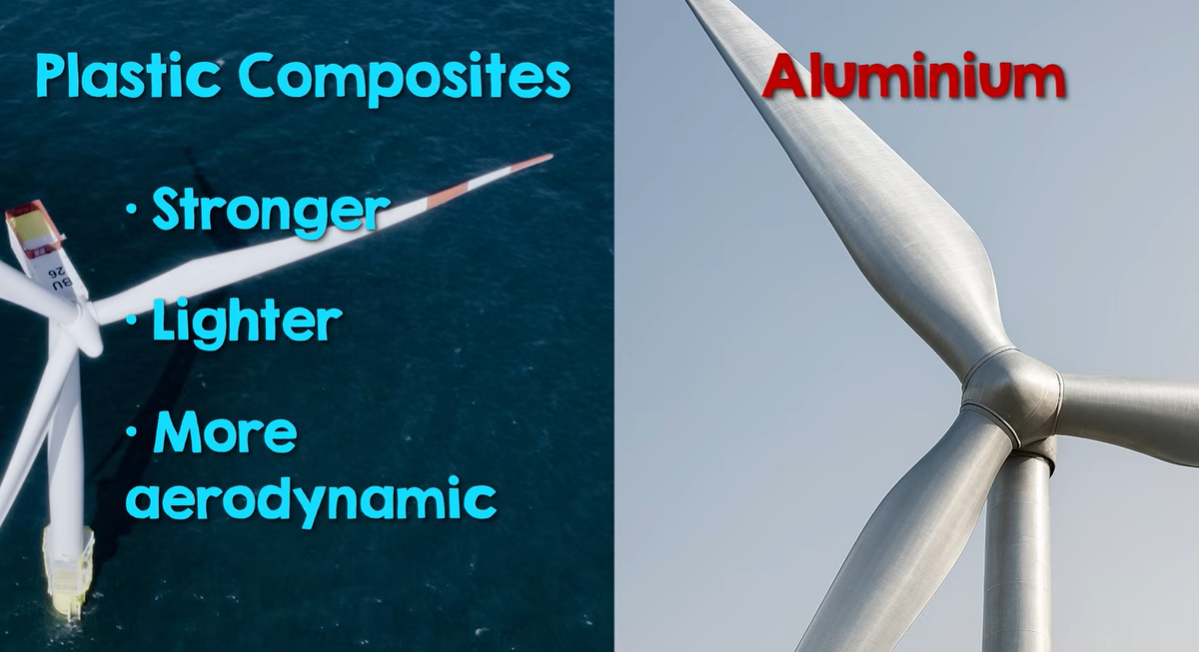
Composite materials allow wind turbine blades to be lighter and more efficient.
Making Transport More Efficient
Plastics also help reduce the weight of cars and aircraft.
Lighter vehicles require less energy to move. Less energy means lower fuel consumption and fewer emissions.
Again, plastics can contribute to reducing climate impact in ways that aren’t immediately obvious.
Improving Building Efficiency
Plastic-based insulation materials also play a role in reducing emissions.
Foam insulation improves thermal efficiency in buildings, reducing the energy required for heating and cooling.
Alternative materials can be bulkier and less efficient per millimetre, which can lead to higher energy use.
So, What’s the Real Problem with Plastic?
If plastics can sometimes help reduce emissions, why do they have such a bad reputation?
The answer is simple:
Pollution.
Plastic waste can persist in the environment for hundreds or even thousands of years. It harms ecosystems, wildlife, and potentially human health.
To deal with this problem, we’ve embraced a simple mantra:
Reduce, Reuse, Recycle.
But recycling might not be the climate solution many people assume.
A Short History of Recycling
Recycling itself isn’t new.
Before modern recycling systems existed, materials such as paper, cloth, and metals were routinely reused within local communities across medieval Europe. Scrap metals like bronze were collected and melted down for reuse, while individuals gathered discarded materials in what became known as the “rag-and-bone” trade. Even seemingly useless materials were repurposed: in Britain, dust and ash from household fires were collected and used as a base ingredient for brickmaking.
Fast-forward to the industrial age, and a new material began to dominate manufacturing: plastic. Early plastics appeared in the late 19th century, including parkesine and celluloid, followed by Bakelite in 1907. These materials marked the beginning of the modern plastics era that would expand dramatically after the Second World War.
Modern recycling campaigns gained momentum in the 1970s, alongside rising environmental awareness. This is when the famous slogan “Reduce, Reuse, Recycle” became popular.
But those three actions were never meant to be equal.
They form a hierarchy:
Reduce
Reuse
Recycle
Recycling was intended to be the last step before disposal, not the main solution.
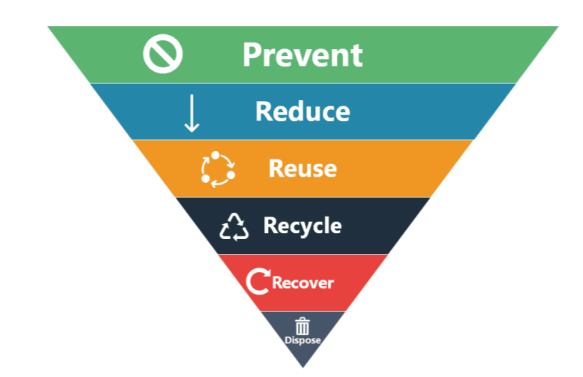
Reduce, Reuse, and Recycle were not meant to be treated as equally effective strategies; they are part of a rubbish management hierarchy where recycling, the last of the three Rs, is the last line of defence before throwing an item in the trash so it can be sent off to an incinerator or landfill.
Why Recycling Often Falls Short
Despite decades of recycling campaigns, global recycling rates remain extremely low.
Recycling is widely seen as the responsible way to deal with plastic waste. But when it comes to climate impact, the picture is more complicated. In some cases, recycling plastic can actually generate more emissions than sending it to a properly managed landfill.
To date, humans have produced roughly 10 billion tonnes of plastic, yet only a small fraction has ever been recycled. Global recycling rates remain extremely low—around 9%—even as plastic production has grown rapidly from about 2 million tonnes in 1950 to roughly 400 million tonnes annually today. Public perception of recycling is also far more optimistic than reality: surveys suggest people believe recycling rates are about five times higher than they actually are.
This gap between perception and reality has prompted increasing scrutiny of how plastic recycling is communicated to the public and whether the system is delivering the environmental benefits many people assume it does.
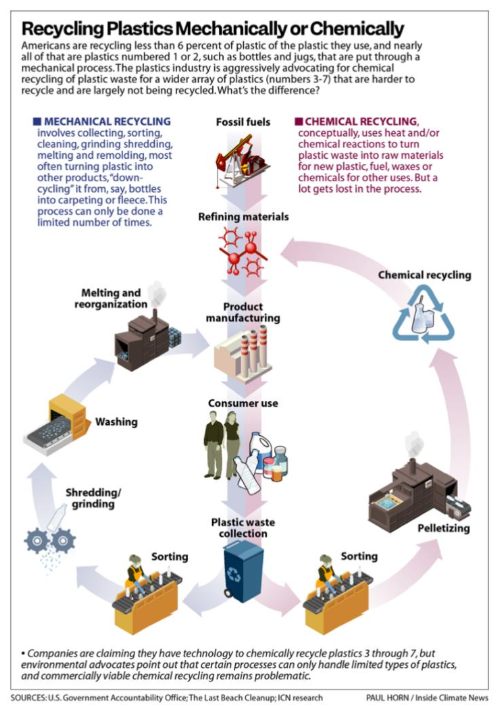
There are two main ways plastics are recycled.
Mechanical Recycling
Mechanical recycling involves:
sorting
cleaning
shredding
melting plastic waste
This process uses less energy, but the resulting plastic is usually lower quality. Manufacturers often need to mix recycled plastic with virgin plastic to meet product standards.
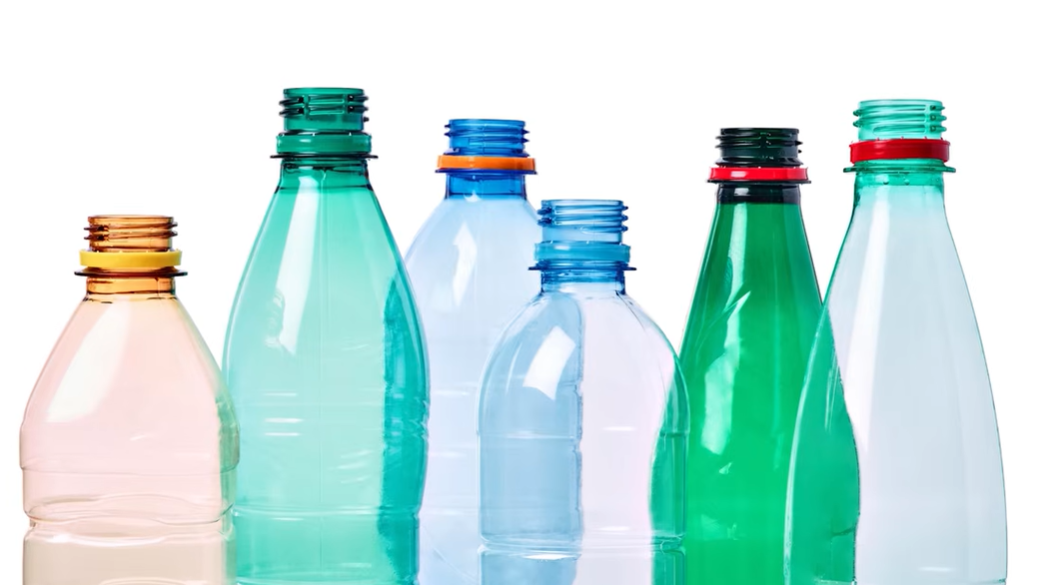
Many recycled PET bottles still contain virgin plastic. Manufacturers often blend recycled and new material—commonly around 70/30—to maintain consistent strength and performance.
Chemical Recycling
Chemical recycling breaks plastics down into their chemical building blocks.
It can handle a wider range of plastic types, but it requires significantly more energy.
Some processes marketed as “chemical recycling” actually convert plastic into fuel—meaning the plastic is ultimately burned, releasing its stored carbon as CO₂.
In many cases, only a small fraction of chemically recycled plastics become new plastic products.
Could Landfills Be a Better Climate Option?
If recycling doesn’t work well for many plastics, what happens to the rest?
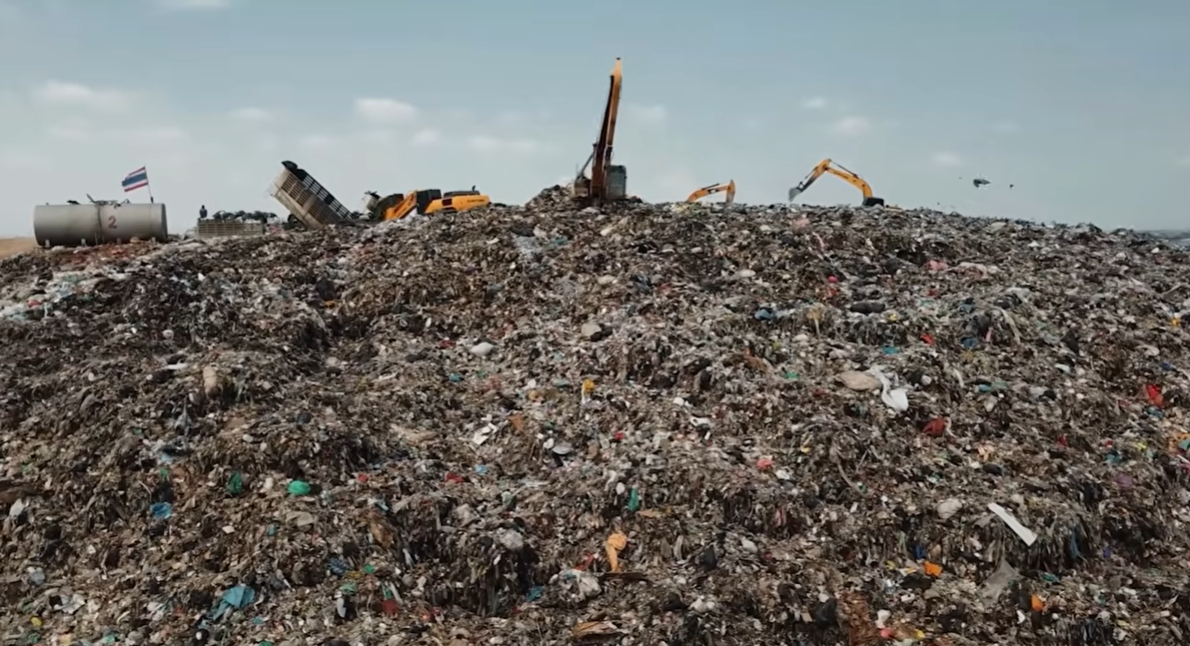
Most plastic waste ends up either incinerated or in landfills.
Neither option sounds appealing. But from a climate perspective, well-managed landfills can sometimes be preferable.
Modern landfills are engineered systems that:
prevent waste from entering ecosystems
collect contaminated runoff water
capture methane gas
reduce uncontrolled emissions
They also prevent plastic waste from entering rivers and oceans. In fact, around 90% of ocean plastic pollution originates from mismanaged waste systems, particularly in regions with limited waste infrastructure.
The Limits of Landfills
Landfills are not a perfect solution.
Many regions are running out of space for new landfill sites.
Organic waste decomposing in landfills is also a significant source of methane. In fact, decomposing waste accounts for roughly 20% of human-caused methane emissions. Because methane makes up about 16% of global greenhouse gas emissions, this means landfills contribute roughly 3.3% of total global CO₂-equivalent emissions. For comparison, agricultural sources such as livestock manure produce roughly three times as much methane.
In theory, modern landfill systems can capture most of this gas. In practice, however, a substantial share still escapes into the atmosphere.
Improving waste management globally could significantly reduce these emissions—but clearly landfills alone cannot solve the plastic problem.
The Future of Plastics in a Post-Oil World
Plastic production continues to grow rapidly. Global production now exceeds 400 million tonnes per year.
But plastics rely heavily on fossil fuels.
As the world transitions to renewable energy and electric vehicles, the supply of cheap petrochemical feedstocks may decline.
Researchers are already exploring alternatives such as:
bioplastics derived from food waste
microbial processes that produce polymer materials
photo reforming technologies that convert plastic waste into hydrogen
However, replacing plastics entirely would require major changes across manufacturing, packaging, and supply chains.
Living in the “Plasticene”
Plastic isn’t disappearing anytime soon.
But the solution isn’t simply banning plastics across the board.
Instead, we need to follow the waste hierarchy:
Prevent unnecessary plastic use
Reduce consumption
Reuse materials where possible
Recycle when appropriate
At the same time, producers must take responsibility for the waste created by their products rather than shifting that responsibility entirely onto consumers.
Plastic isn’t purely good or bad. Like many technologies, its impact depends on how we produce, use, and manage it.
The goal should be simple:
Do the least harm possible while we transition to better systems.
Watch this content as a video on Engineering with Rosie on YouTube.