

Australia’s Solar Superpower Paradox: Fixing the Grid Before It Breaks
Australia is, by almost any measure, a solar superpower.
In recent months, renewable energy has regularly supplied more than half of the electricity in Australia’s National Electricity Market. Roughly half of that renewable generation (about a quarter of all electricity) comes from solar power. On a per-person basis, Australia generates more solar electricity than any other country in the world. Global datasets tracking solar electricity generation per capita highlight just how far ahead Australia is compared with other advanced economies.
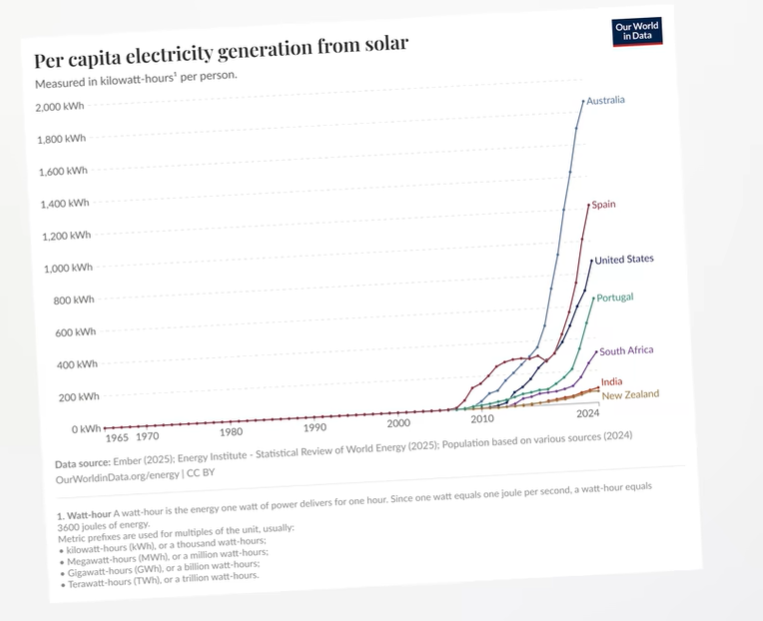
Per capita solar electricity generation has surged globally, with Australia leading the way. Source: Our World in Data. Ember (2025) Energy Institute - Statistical Review of World Energy
And this is only the beginning. Solar deployment is expected to continue expanding rapidly for decades as the country moves towards a fully decarbonised electricity system.
But this success brings an unexpected challenge.
The electricity grid that powers modern Australia was designed more than a century ago for a very different energy system - one built around a small number of large coal-fired power stations. Today, that same network must suddenly manage millions of small solar generators, all producing electricity at roughly the same time of day.
The physics of the grid, and the economics of electricity, are being rewritten.
Australia’s solar boom has exposed three major challenges that will shape the clean-energy transition:
keeping electricity flowing after sunset
ensuring solar power remains economically viable
maintaining grid stability as coal power stations retire
Australia’s greatest strength - cheap, abundant solar energy - could also become its biggest vulnerability if the grid cannot adapt.
The Problem with Too Much Sun
Solar power is now so abundant that it is starting to disrupt the electricity market itself.
On sunny days, large volumes of solar generation flood the grid during the middle of the day. When supply dramatically exceeds demand, wholesale electricity prices collapse, sometimes even dropping below zero.
Over the past year, the average price received by solar farms has been just $37 per megawatt-hour, compared with an average market price of $122 per megawatt-hour. During spring, conditions can be even more extreme. In one recent month, solar assets earned an average of negative $2.67 per megawatt-hour while the market average remained above $55.
South Australia provides a particularly striking example. During the first quarter of 2025, electricity prices were zero or negative in almost one-third of all dispatch intervals.
These negative prices are not caused by solar alone. Coal-fired power stations play a large role as well. Unlike solar farms, which can simply switch off when prices drop, coal plants cannot easily ramp down below a certain level of generation. If they want to remain online for the profitable evening peak, they must keep running throughout the day - even if that means bidding electricity into the market at negative prices.
But the coal fleet is ageing. Over the next decade, most of Australia’s coal power stations are expected to retire.
And the energy that replaces them will come primarily from solar.
This creates a paradox: the oversupply of solar energy during the day is already making new solar farms less profitable, potentially slowing investment in the very technology needed to replace coal.
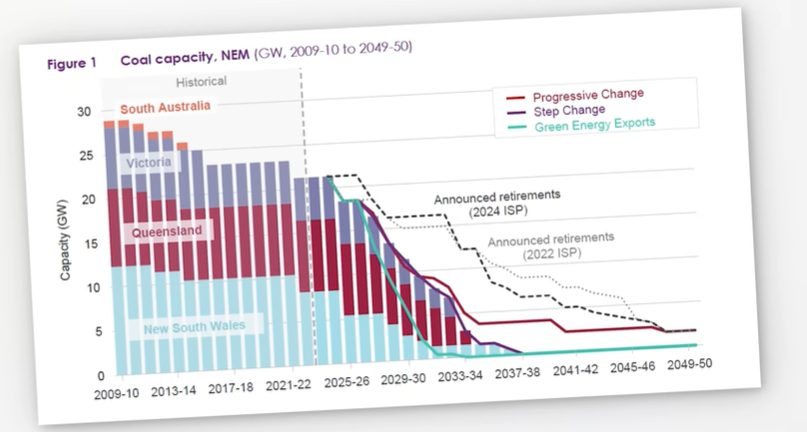
Photograph: Australian Energy Market Operator Source
Batteries Change the Economics
Energy storage provides the obvious solution.
Batteries allow cheap solar energy generated during the day to be stored and released later when demand rises and prices increase. In doing so, they smooth out the midday oversupply and provide electricity during the evening peak.
Australia is now experiencing an extraordinary boom in battery deployment.
Utility-scale batteries are being built faster than any other type of electricity infrastructure in the country. In fact, there is currently more battery capacity under construction than the combined peak output of Australia’s gas peaking plants.
At the same time, home batteries are expanding rapidly. In just three months following the introduction of the Australian Government’s Cheaper Home Batteries Program, more than a gigawatt of residential battery capacity was installed. The program reduces the upfront cost of home batteries by roughly 30 percent, making them far more accessible to households.
This rapid expansion of storage means the first two challenges of a solar-dominated grid (providing electricity after sunset and stabilising solar economics) are already beginning to be addressed.
But a third challenge remains.
What the Grid Actually Needs
Traditional coal, gas and hydro power stations do more than simply generate electricity. Their large spinning generators provide two important physical properties that help keep the grid stable: inertia and system strength.
Inertia acts like a flywheel. The enormous rotating mass inside generators resists sudden changes in speed, helping stabilise the grid’s frequency when disturbances occur.
System strength refers to the grid’s ability to maintain a stable voltage waveform and respond effectively when faults occur on the network.
These properties have historically been provided automatically by the mechanical equipment inside large power stations. But solar farms, wind turbines and batteries connect to the grid through power electronics known as inverters, which do not naturally provide the same stabilising effects.
As synchronous generators retire, these services must be replaced deliberately. Without them, the electricity grid becomes more fragile and more vulnerable to cascading outages.
A Warning from Europe
The importance of grid stability was illustrated dramatically in April 2025, when a major blackout struck Spain and Portugal.
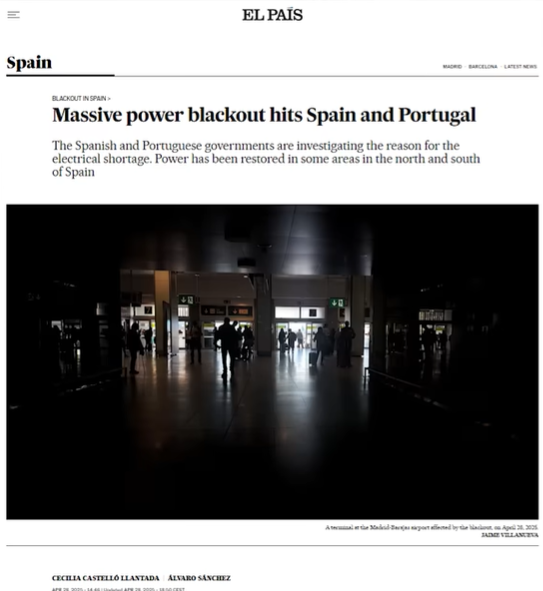
Massive power blackout hit Spain and Portugal in April 2025. Source
A fault in the system triggered a series of events that ultimately left around ten million people without power. Generators disconnected to protect themselves, frequency collapsed and the network struggled to recover.
The Iberian Peninsula shares an important characteristic with Australia: both sit at the edge of large transmission networks with relatively weak connections to neighbouring systems.
The precise causes of the blackout are still being analysed, and it would be inaccurate to attribute the event solely to renewable energy. However, the incident highlighted a critical lesson: when voltage control and system strength are marginal, even relatively small disturbances can cascade into widespread outages.
Australia’s Unexpected Advantage
Fortunately, Australia is better prepared for this challenge than many other countries.
Long before the rapid growth of renewable energy, engineers were already dealing with weak sections of the electricity network in remote parts of the country. Towns located hundreds of kilometres from major power stations often sit at the end of long transmission lines where voltage can fluctuate easily.
To stabilise these areas, utilities deployed technologies such as synchronous condensers, capacitor banks and advanced voltage-control systems.
Synchronous condensers (essentially spinning machines similar to generators) have been particularly important in providing system strength. South Australia, which now regularly generates more than 70 percent of its electricity from wind and solar, has installed several large synchronous condensers to maintain grid stability.
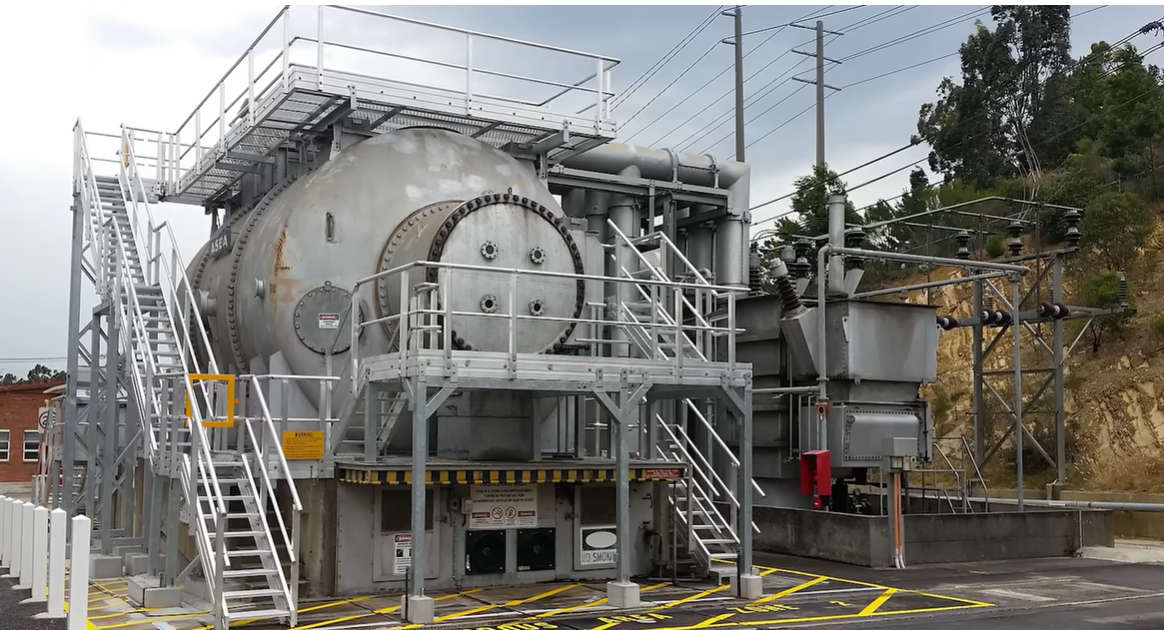
Synchronous condenser. Source: Myria CC by SA 4.0, Wikipedia
These machines work well, but they also have limitations. They are expensive, relatively slow to deploy, and less flexible than newer technologies.
As renewable energy expands rapidly, the grid requires solutions that can be deployed faster and respond more dynamically.
The Rise of Grid-Forming Inverters
The next generation of grid stability technology may come not from mechanical equipment, but from software.
Every solar farm, wind turbine and battery connects to the grid through an inverter that converts direct current (DC) into alternating current (AC). Most inverters today are grid-following, meaning they simply synchronise themselves to the existing electricity waveform on the grid.
But a new class of devices, known as grid-forming inverters, work differently.
Rather than following the grid, they create the reference signal themselves. In effect, they act like the conductor of an orchestra, setting the rhythm that other devices follow.
Inside these inverters are control algorithms that replicate the stabilising behaviour of traditional generators. They can provide virtual inertia, regulate voltage and respond to disturbances within milliseconds - far faster than mechanical systems.
This technology allows inverter-based resources such as batteries to actively stabilise the grid rather than simply injecting power into it.
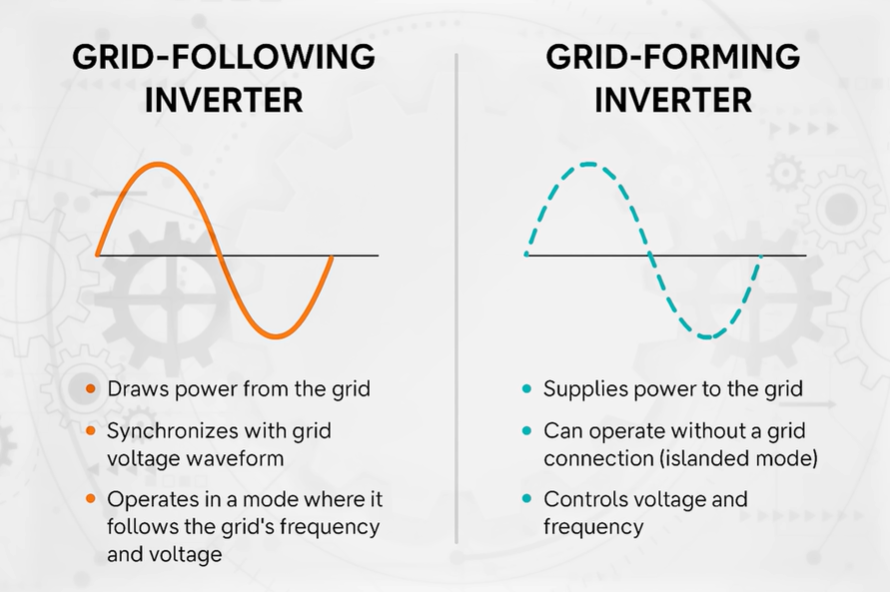
Grid-following inverters synchronise to the existing grid signal, while grid-forming inverters create the voltage and frequency reference themselves.
Batteries and Grid-Forming Technology
When combined with large-scale batteries, grid-forming inverters become particularly powerful.
The inverter provides the intelligence, maintaining frequency, voltage and stability, while the battery provides the stored energy needed to support the system.
Together, they solve both sides of Australia’s solar paradox.
From an engineering perspective, they supply the inertia and system strength required to maintain grid stability even when no traditional power stations are operating.
From an economic perspective, they absorb excess solar energy during the day and release it when electricity becomes scarce and valuable.
Several projects across Australia are already demonstrating this approach. The Wallgrove Battery in Western Sydney is operating with grid-forming controls within a dense electricity network. In Western Australia, the Cunderdin Hybrid Project combines a 128-megawatt solar farm with a large battery designed specifically for grid-forming operation.
Projects like these are early examples of how the future electricity system may operate.
From Mechanical Grids to Software-Defined Systems
For more than a century, grid stability relied on physical inertia - the enormous rotating mass of turbines and generators.
In the electricity system of the future, stability will increasingly come from software.
Grid-forming batteries can provide inertia, voltage control and frequency regulation without burning any fuel. Instead of tonnes of spinning steel, stability will come from fast-responding control systems and power electronics.
Australia’s energy market operator, AEMO, estimates that 25 to 30 percent of future generation capacity may need to be grid-forming in order to maintain reliability once coal power stations retire.
That means thousands of megawatts of intelligent inverters actively stabilising the grid.
The technology is already proving itself in pilot projects across the country. The challenge now is scaling it quickly enough to keep pace with the rapid expansion of renewable energy.
Fixing the Grid Before It Breaks
Australia’s solar boom has revealed a fundamental truth about the clean-energy transition.
Success creates new engineering challenges.
A grid designed for a handful of large power stations must evolve into one capable of coordinating millions of distributed energy resources. Stability will no longer come from mechanical inertia alone, but from intelligent electronics and sophisticated control systems.
The transformation is profound: from heavy machinery to software-defined infrastructure.
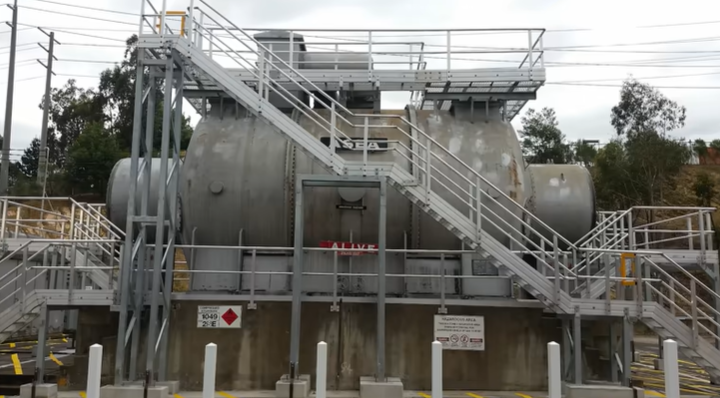
Synchronous condenser installation at Templestowe substation, Melbourne Victoria, Australia. Source: Myria CC by SA 4.0, Wikipedia
But Australia has one critical advantage. Decades of experience managing weak electricity networks have given engineers the tools needed to solve these problems.
The same ingenuity that once stabilised remote outback power lines is now helping to build the world’s first fully renewable electricity system.
And if it works here, it may provide a blueprint for grids around the world.
Watch this content as a video on Engineering with Rosie on YouTube.
