

Compressed Air Might Be Making a Comeback — But Not How You Think
Before electricity took over, there was another way of moving energy around. It ran through pipes under cities, powered machinery, and even helped deliver messages.
That technology was compressed air.
It had a moment where it looked genuinely competitive. Then it faded out.
Now it’s showing up again - this time solving a completely different problem.
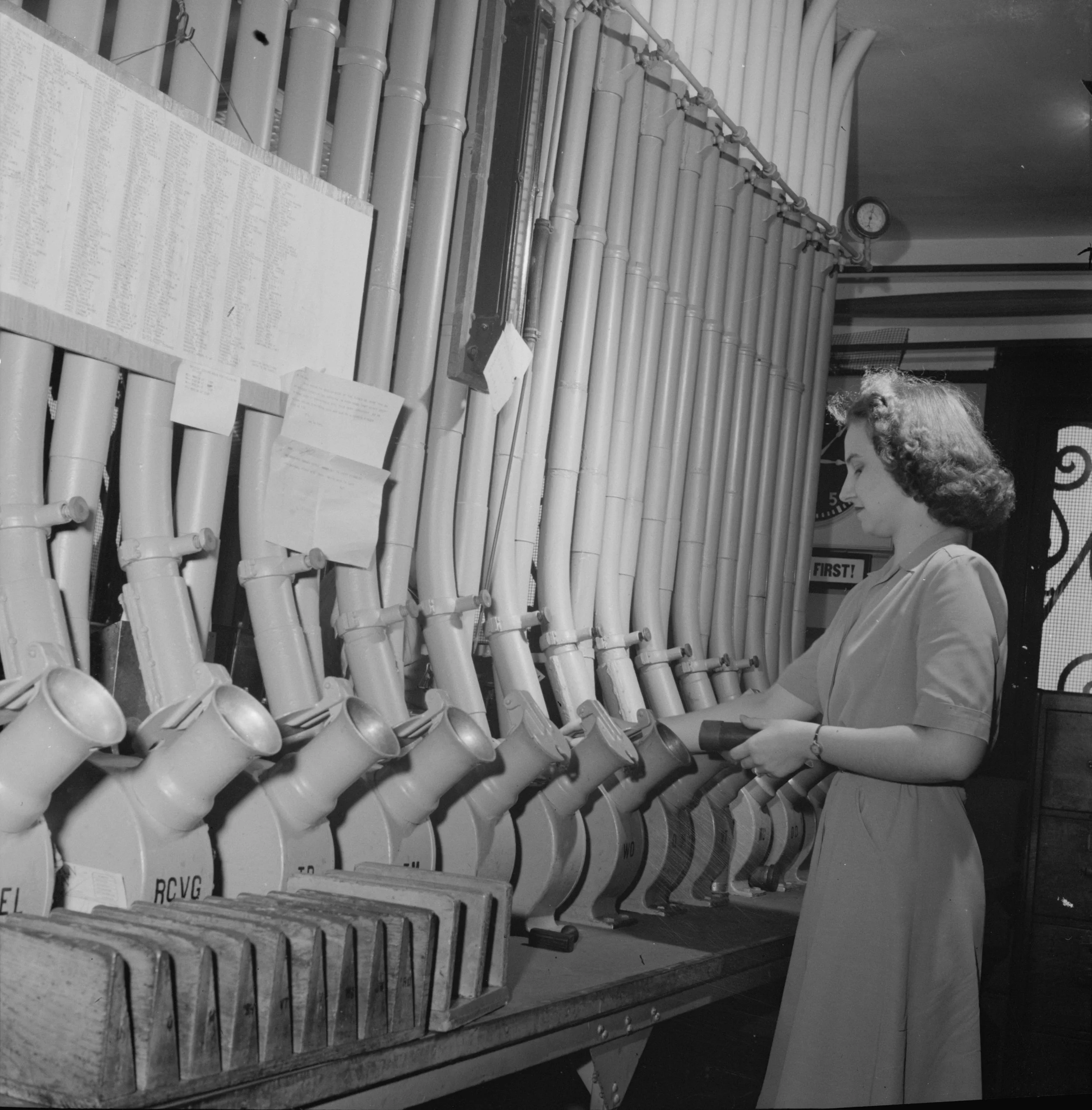
Compressed air was used to send power through pipes, instead of wires, but it lost out. Source
From Bellows to Underground Networks
Compressed air has been part of engineering for a long time. Blacksmiths used bellows to force air into furnaces, raising temperatures enough to work metal. It wasn’t glamorous, but it did the job.
By the 19th century, that same idea had scaled up into something much more ambitious.
Engineers built pneumatic tube systems that could fire small containers through pipes using pressure differences. Cities like Paris and Berlin used them to move messages across towns in minutes.
Paris ended up with hundreds of kilometres of these pipes, running through the city like a second hidden infrastructure.
For a while, people thought this might go further - that compressed air could move not just messages, but energy.
Why Electricity Won
At the time, there were a few competing ways to move energy: steam, water, compressed air, and electricity.
Compressed air had some advantages. Early electrical systems were risky and unfamiliar, while compressed air felt simpler and safer.
But it had one big drawback: it lost too much energy over distance.
Once alternating current systems improved, electricity could move power much more efficiently. A long-distance line built in Germany in the 1890s managed around 75% efficiency - well beyond what compressed air could achieve.
That pretty much settled it.
Electricity became the backbone of modern energy systems.
Not Dead, Just Used Differently
Compressed air didn’t disappear. It just stopped trying to do everything.
It found a place in more local, practical uses:
Powering tools like drills and jackhammers
Running air brakes on trains
Operating machinery in workshops
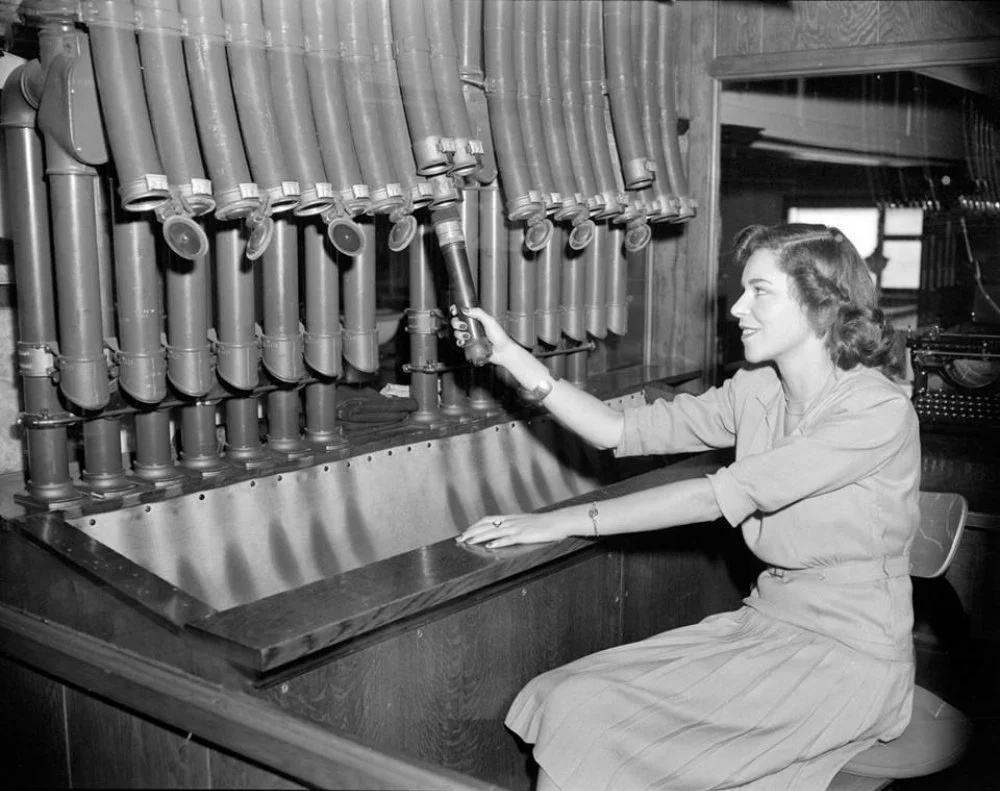
Moving cash and receipts through those old department store tube systems
These didn’t need long-distance transmission. They just needed reliable, on-demand power.
The Problem Has Changed
Fast forward to today, and the challenge isn’t moving electricity - it’s storing it.
Wind and solar can generate a lot of energy, but not always when we need it. So the question shifts to:
What do we do with excess energy, and how do we get it back later?
This is where compressed air comes back into the picture.
How Compressed Air Stores Energy
The modern version is called Compressed Air Energy Storage (CAES).
The idea is pretty simple:
Use excess electricity to compress air
Store it underground
Release it later to spin a turbine and generate electricity
Instead of storing energy chemically like a battery, you’re storing it as pressure.
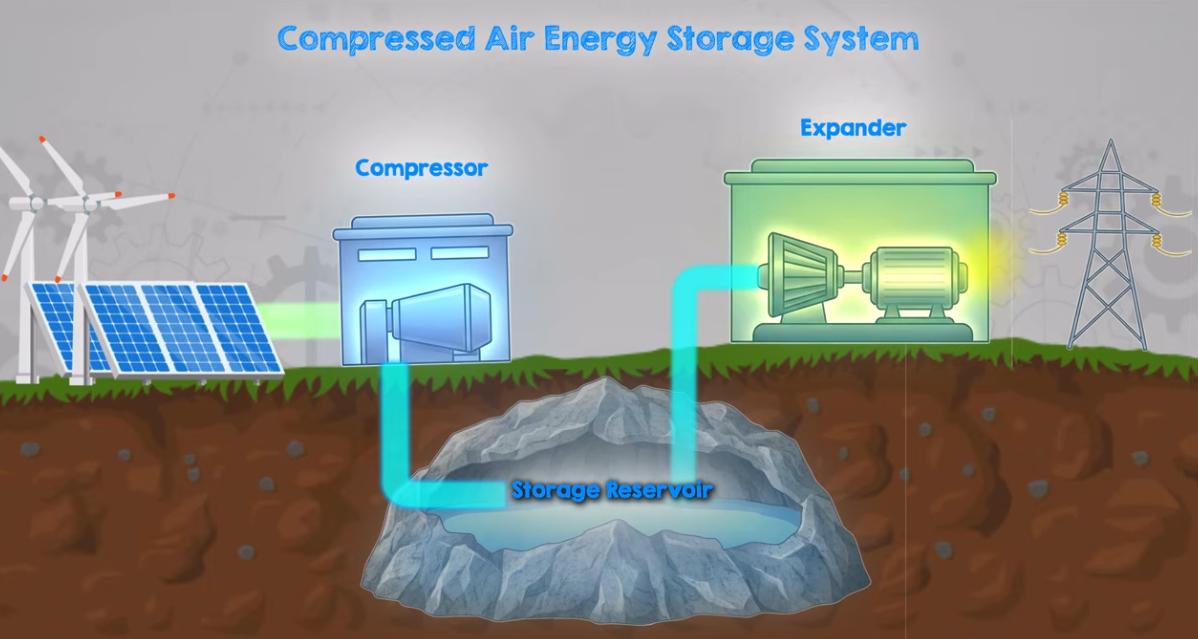
This time CAES is not trying to compete with electricity, it is trying to complement it.
The Catch: You Need Space
This only works if you have somewhere to put a lot of air.
Above-ground tanks get impractical very quickly at grid scale. So most systems use underground spaces like:
Salt caverns
Old mines
Aquifers
Excavated rock chambers
Salt caverns are particularly useful because they naturally seal themselves under pressure.
But suitable geology isn’t everywhere, which limits where this can be built.
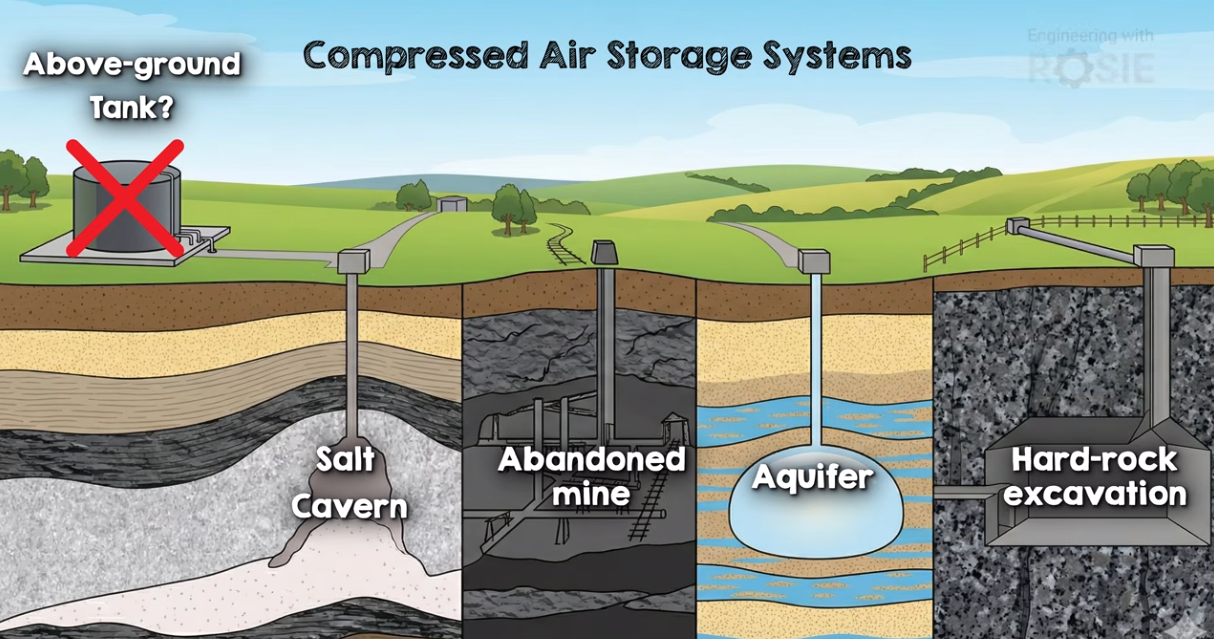
The goal is always the same - a very large, completely airtight volume underground.
Fixing the Efficiency Problem
Early systems weren’t very efficient.
The first large plant in Germany released the heat created during compression, then burned natural gas later to heat the air again before generating electricity. That meant losses and ongoing emissions.
Newer designs handle this better:
Some systems store the heat and reuse it
Others aim to keep temperature stable throughout the process
That’s pushed efficiency up into the 60–70% range.
A Real Project in Australia
There’s now a large CAES project being developed near Broken Hill.
It’s designed to:
Deliver around 200 MW
Store energy for about 8 hours
Supply up to 80,000 homes for a day
One interesting detail is how it stores the air.
Instead of an empty cavern, it uses a water-filled one. As air is pumped in, it pushes water up into a reservoir above ground. When energy is needed, the water flows back down, pushing the air back up through turbines.
This helps maintain pressure and reduces stress on the surrounding rock.
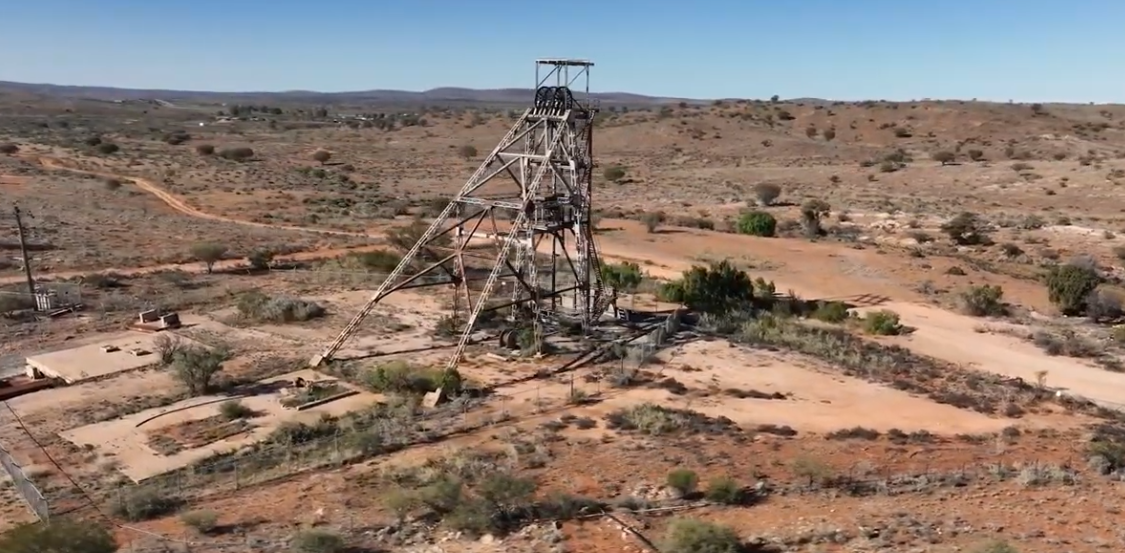
Hydrostor’s Silver City Energy Storage project. Source
Can It Compete With Batteries?
Lithium-ion batteries are still the dominant option for energy storage.
They’re flexible and already widely deployed.
Compressed air has some advantages:
Long lifespan
Very low energy loss during storage
Lower cost at large scale (in the right conditions)
But it also depends heavily on location and geology.
So it’s unlikely to replace batteries outright.
So Where Does This Fit?
It’s filling a gap - particularly for medium-duration storage where you need energy for longer than a few hours.
It’s also a good reminder that technologies don’t always disappear. Sometimes they just wait for the right problem to come along.
From underground message tubes to underground energy storage, compressed air is getting another shot.
Whether it becomes widespread or stays niche is still unclear.
But it’s back in the mix.
Watch this content as a video on Engineering with Rosie on YouTube.
